
Table of Contents
Introduction
Healthcare compensation keeps getting harder to manage. Provider roles continue to expand, productivity expectations shift, and payment models grow more detailed. It’s no longer enough for organizations to rely on static contract templates or loose estimates of provider workload.
Physician contracts outline the structure of payment but without accurate productivity metrics, those agreements can quickly fall out of sync with reality. Metrics like wRVUs tie daily work to compensation. Miss the mark on tracking either piece and you’re looking at payment disputes, compliance gaps, or even worse.
Smart compensation planning needs better tools. The right system connects physician contracts and physician productivity metrics in real time, keeping financial performance, provider satisfaction, and regulatory obligations on track.
The Foundation: Physician Contracts
Physician contracts aren’t just filed away after onboarding. They define expectations, obligations, and how those providers get paid. Every clause matters. That includes how time is tracked, which services are compensated, and whether the payment terms fall within Fair Market Value standards.
Compliance teams rely on these agreements to verify that payments align with federal and state regulations. Miss a required service detail or fail to specify how time should be recorded and the organization risks overpayment, audit issues, or clawbacks. Clear physician contracting helps avoid these traps by spelling out work duties and reporting methods.
Compensation models (whether based on hours, call, wRVUs, or quality metrics) must connect to the language in the contract. When those two parts are out of sync, it leads to confusion. The Dynafios Time & Effort Module was built to solve this. It manages contracts that require detailed timekeeping, ties them to payment rules, and keeps everything auditable.
Why Productivity Metrics Matter
Physician productivity metrics turn daily clinical work into measurable data. One of the most common benchmarks is the work Relative Value Unit, the wRVU. It assigns a numerical value to the effort, skill, and time required to perform a medical service. Other measures might include accurate modifiers , quality outcomes, or procedural counts, depending on the specialty.
These metrics drive compensation. Many provider contracts include wRVU targets tied directly to pay. If they hit the mark they can earn more. Fall short and payments can lag behind expectations. This link between productivity and pay only works when the metrics are accurate and up to date.
Each specialty varies. An orthopedic surgeon’s output looks different from a neurologist’s or hospitalist’s. That’s why benchmarking matters. Comparing provider performance against national data or internal targets brings clarity and fairness to compensation. Provider compensation platforms like the Dynafios Performance-Based Compensation Module includes built-in benchmarking, making it easier to evaluate performance using contractual terms and national standards.
Disconnects Between Metrics and Contracts
When physician contracts and actual work don’t match, problems show up fast. A provider might be paid for duties not performed or miss payment for services delivered. That mismatch creates compliance risk, frustrates providers, and leaves administrators scrambling.
Tracking time in one place and productivity in another makes things worse. Manual entry, spreadsheets, and siloed systems hide red flags until they turn into bigger issues like overpayments, underpayments, or audit failures.
Contract misalignment isn’t always obvious. Sometimes it’s a missing clause or a vague definition of billable work. The Dynafios Time & Effort Module connects the dots. It manages contracts that require timekeeping, tracks activity in real time, and improves financial oversight with reporting that matches the contract’s terms.
Compensation Planning Software Makes It Work
Managing provider pay with spreadsheets or outdated systems doesn’t cut it anymore. Dynafios built its compensation planning software to simplify this work and remove the guesswork. The Performance-Based Compensation Module and Time & Effort Module work together as a unified solution for managing contracts, tracking productivity, and executing payments.
These tools take complex compensation models like wRVU-based pay, monthly draws, quality bonuses, or full-risk structures and turn them into clear, automated workflows. Administrators can approve time, review productivity, and send payment all in one place.
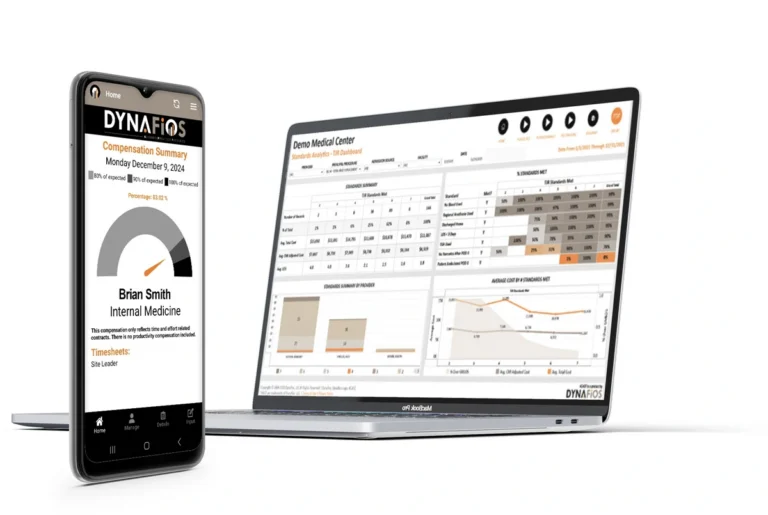
Dashboards update in real time so nothing gets missed. Predictive modeling uses past performance to forecast future spend. That means fewer surprises during reconciliation or budgeting. And with mobile access, providers and managers can view data, approve entries, or run reports from anywhere.
Instead of juggling data across systems, Dynafios compensation management systems bring it all together. This physician management software reduces errors, improves transparency, and helps healthcare organizations pay providers accurately and on time.
Real-World Benefits for Hospitals and Providers
Health systems using Dynafios tools see fewer disputes, faster payments, and better provider satisfaction. With contracts, productivity, and payments all tracked in one place, questions get answered quickly, and everyone sees the same data. That kind of clarity supports fairness and improves trust around provider compensation.
Accurate time reporting also plays a big part in maximizing Medicare reimbursements. Missed logs or incomplete records can cost organizations thousands in lost revenue. The Dynafios Time Studies Module helps fix that. It tracks participation, flags missing entries, and creates audit-ready reports that meet Medicare’s strict requirements.
Instead of chasing signatures or correcting errors, teams can focus on what matters: running efficient operations and paying providers what they’ve earned.
Smarter Compensation Starts with Better Data
Getting physician contracts and productivity metrics aligned is the foundation of effective provider compensation. Without clear terms and accurate tracking, health systems face financial risk, frustrated providers, and wasted time.
Smart compensation software changes that. Tools like the Dynafios Performance-Based Compensation and Time & Effort Modules bring everything into one place—contracts, metrics, time, and payments. It’s cleaner, faster, and easier to manage.
Hospitals and practices ready to improve their compensation planning can start with better tools. Dynafios helps make that shift possible.
Key Takeaways
- Physician contracts define payment terms, but without accurate productivity tracking, those agreements fall out of sync with actual work performed.
- wRVUs are the most common benchmark for measuring physician output, and they tie directly to compensation in most provider contracts.
- Tracking time in one system and productivity in another creates compliance gaps, payment disputes, and audit risk.
- Compensation planning software that connects contracts, metrics, and payments in one place removes the manual work and reduces errors.
- Benchmarking provider performance against national standards brings consistency and fairness to compensation decisions across specialties.
- Accurate time reporting protects Medicare reimbursements. Incomplete records cost organizations revenue that’s difficult to recover.
- Real-time dashboards and predictive modeling give administrators a clearer picture of spending before reconciliation surprises hit.