
Table of Contents
Introduction
Physician compensation disputes are expensive, slow, and corrosive to the working relationships that keep a clinic running. Most administrators know this, but not many talk about it openly.
The typical setup looks like this: a spreadsheet someone built three years ago, a chain of emails with conflicting numbers, a contract term that went unflagged until it became a problem. By the time a pay discrepancy surfaces, it has already cost the organization hours of reconciliation work, strained a physician relationship, or both.
Manual tracking compounds the risk. Human entry errors creep into wRVU calculations. Contract terms get missed. Payment timelines slip. And when a compliance review comes around, the documentation trail is thin.
Physician compensation management shouldn’t operate on good intentions and spreadsheet formulas. The administrative drag is real, the compliance exposure is real, & the fix exists. It starts with having the right systems in place.
Fair Market Value Is the Floor, Not the Ceiling
Every physician compensation decision sits inside an FMV boundary. Pay too little and you lose physicians to competitors. Pay too much and you invite Stark Law violations, False Claims Act exposure, & the kind of regulatory scrutiny that consumes legal budgets and leadership attention for months.
The margin for error is thin. Manual processes make it thinner. Compensation figures pulled from outdated surveys, contracts reviewed inconsistently, and payment approvals with no audit trail all create gaps that regulators find quickly.
FMV compliance requires current data, documented methodology, and a defensible paper trail. That’s where most clinics struggle. Building that infrastructure from spreadsheets takes time most administrators don’t have.
Dynafios brings senior appraisers to this work directly. FMV opinion letters, contract adjudication, and ongoing auditing give organizations something manual processes can’t: a clear, defensible position with regulators before a problem develops.
What Physician Compensation Software Actually Does
The administrative bottlenecks in physician compensation management are predictable. Good software targets each one directly.
Timekeeping. Physicians log hours and on-call activity in the platform rather than submitting spreadsheets or paper forms. The data feeds directly into compensation calculations, with no manual re-entry and no reconciliation step where errors accumulate.
Contract tracking. Every agreement lives in one place, with terms, rates, and renewal dates visible to the people who need them. Missed contract milestones stop being a recurring problem because the system flags them before they become one.
wRVU monitoring. Production data updates in real time. Administrators see exactly where each physician stands against their targets, and physicians see the same numbers. Disputes shrink when both sides work from identical data.
Real-time reporting. Compensation data, production metrics, & compliance documentation are available on demand. When a compliance review arrives, the audit trail is already built. Nobody scrambles to reconstruct six months of payment history from email threads.
Each function removes a specific handoff where information gets lost, delayed, or entered incorrectly. The platform handles the mechanics. Your team handles the decisions.
Speed Without Cutting Corners
The reasonable concern with any new platform is that implementation creates more work before it reduces any. That concern deserves a direct answer.
The first few weeks of transitioning to physician compensation software require setup time. Contracts get loaded, physician profiles get configured, workflows get mapped to the platform. That work is real and it’s finite.
What comes after is the point. Approval cycles that took days of back-and-forth email get resolved in the platform. Compensation disputes that required manual investigation get answered with a few clicks. Audit preparation that once meant pulling records from multiple sources takes minutes.
Clinics that run physician compensation management through a dedicated platform don’t move slower. They stop losing time to the same recurring problems: the missing timesheet, the misread contract term, the payment that went out wrong & had to be corrected.
The upfront investment is measured in weeks. The operational return runs continuously.
What Clinics Get Wrong Without It
The failure modes in manual physician compensation management tend to follow the same pattern. They’re invisible until they’re expensive.
Outdated compensation data is the most common problem. Clinics running pay decisions off survey data from two or three years ago are making FMV arguments that won’t hold up. Markets shift. Specialty rates move. The benchmark you used at contract signing may no longer reflect current standards.
Inconsistent contract terms create a different kind of exposure. When compensation agreements get negotiated and tracked across separate spreadsheets and email chains, discrepancies develop quietly. Two physicians in the same specialty, hired a year apart, end up on materially different terms with no documented rationale.
Compliance gaps surface last, and at the worst time. An audit reveals missing documentation, inconsistent payment records, or FMV positions that were never formally supported.
None of these problems appear early. Manual processes let them accumulate until the cost of fixing them is significantly higher than the cost of preventing them ever was.
Putting It Together With Dynafios
Accurate, on-time physician compensation is a baseline requirement for keeping good physicians and staying compliant.
When the right platform is in place, the outcomes are concrete. Physicians get paid correctly, on schedule, with full visibility into how their compensation was calculated. Administrators stop spending hours on reconciliation work and start spending time on decisions that require human judgment. Compliance documentation exists before anyone asks for it.
The operational picture changes too. Fewer disputes. Faster approvals. A compensation process that runs consistently whether the administrator who built it is in the office or not.
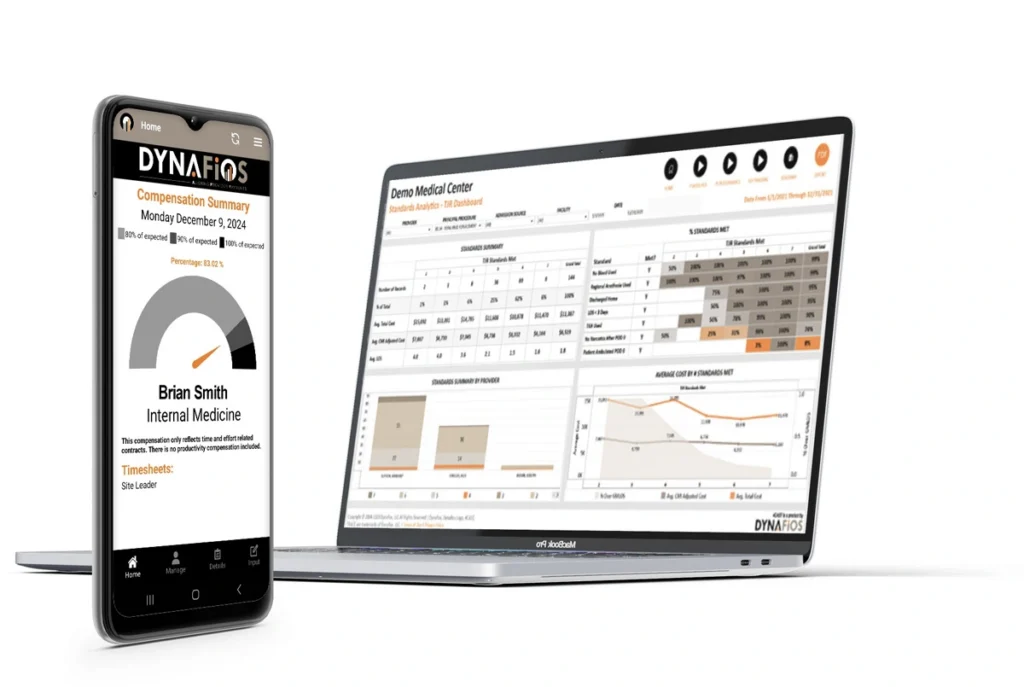
Dynafios built the Provider Compensation Platform specifically for this work. Paired with physician practice consulting and FMV expertise from senior appraisers, it gives clinics a complete solution for physician compensation management, from contract compliance through day-to-day operations.
The clinics that get this right don’t do it with better spreadsheets. They do it with better systems.
Key Takeaways
- Manual physician compensation processes create compliance exposure, payment errors, & strained physician relationships that compound over time before anyone catches them.
- FMV compliance requires current data, documented methodology, and a defensible audit trail. Spreadsheets and email chains don’t build that reliably.
- Physician compensation software handles timekeeping, contract tracking, wRVU monitoring, & real-time reporting in one place, removing the handoffs where errors accumulate.
- Implementation takes weeks. The return on that investment runs continuously in faster approvals, fewer disputes, and cleaner compliance documentation.
- The most common failure modes in manual compensation management are invisible until an audit surfaces them, at which point the cost of fixing them far exceeds the cost of prevention.
- The clinics that manage physician compensation well do it with purpose-built systems, not better versions of the same manual processes.