Overview
Saint Mary’s Hospital (SMH) and NOSS (Neurosurgery, Orthopaedics & Spine Specialists) partnered with Dynafios to better align physicians, improve operational performance, and implement structured physician productivity metrics. Through the Dynafios C2i Process and 4CAST Analytics platform, the organizations optimized financial, clinical, and operational performance, including measurable improvements in on-call management and scheduling workflows, resulting in a net positive gain of $305,000.
Client Profile
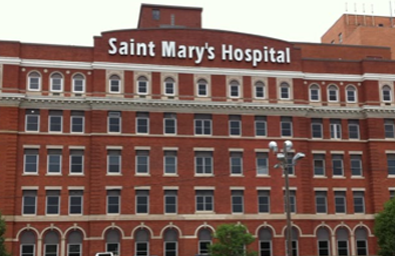
Saint Mary’s Hospital (SMH) in Waterbury, Connecticut, is a not-for-profit, acute care, Yale-affiliated community teaching hospital. The hospital is designated as a Level II Trauma Center and offers a host of specialty medical services. Saint Mary’s Hospital is a member of Trinity Health of New England.
NOSS (Neurosurgery, Orthopaedics & Spine Specialists) was formed by merging three well-established specialty medical practices with a deep commitment to patient outcomes. NOSS includes board-certified providers in a variety of specialties and is an advocate of patient education.
Situation
Saint Mary’s Hospital and NOSS structured their C2i management agreement to better align and engage the Neuroscience Physicians to drive results and improve the physician productivity metrics around both quality and program improvements.
Solution
To drive quality and improve performance, Saint Mary’s Hospital and NOSS Neuroscience Physicians agreed to ten key performance indicators or KPIs, which included:
- Pre-Operative Education – Implement a comprehensive pre-operative program including patient education and review of the process.
- Pain Management – Develop and implement opioid sparing pain management protocol.
- Turnover Time (TOT) – Develop a procedure to reduce room turnover time (the number of minutes when one patient leaves the OR until the next patient enters the OR—wheels out to wheels in).
- First Case on Time Starts (FCOTS) – Develop a procedure to improve FCOTS (the percentage of cases with the patient in the room at the scheduled time; wheels in at the scheduled time for the first case in the room between the hours of 7am and 9am).
- Reduction of Variation for Lumbar Fusions – Develop and implement a standardized clinical care pathway for Lumbar Fusion, review of preference cards and reduction of variation amongst SMH Providers.
- Reduction of Variation for Cervical Fusions – Develop and implement a standardized clinical care pathway for Cervical Fusion, review of preference cards and reduction of variation amongst SMH Providers.
- Community Education – Conduct community education for the greater Waterbury area to educate both patients and providers on types of procedures, quality outcomes and the services offered as part of the program.
- Improve Patient Access – Develop specific activities and tactics which will increase access of services to patients within the defined service area; include community education, screening and monthly visits to the Primary Care Physicians to ensure a high level of service is provided.
- Develop Back Institute – Create a comprehensive package of services and clinicians as a specialized center for spinal care. Develop strategy and tactics to create a Back Institute with an appropriate site of care for various procedures.
- Establish Transfer Guidelines for Neuroscience Patients – Develop appropriate guidelines for the triage and transfer of patients to other facilities within the system during normal operating hours and after hours at SMH (on-call).
These ten KPIs were aligned with key physician productivity metrics, including operating room efficiency, case start times, contribution margin performance, and on-call management effectiveness.
Results
Dynafios tracked and verified the following achievements:
- Net positive gain of $305,000
- Reduced inpatient length of stay (LOS) by .3 days for all inpatient (IP) procedures by implementing clinical best practices and pain management protocols in conjunction with Anesthesia
- Reduced inpatient LOS while shifting cases to an outpatient setting
- Standardized clinical supply items for both lumbar and cervical fusions
- Improved median variable contribution margin (CM) by approximately $550 per case
- Cervical Fusion CM increase of 23% per case
- Lumbar Fusion CM increase of $2,000 per case
- Increased operating room efficiency, including first case on time starts (FCOTS) and room turnover times (TOT)
- Improved FCOTS by 45% (80% of cases start on time)
- Reduced TOT by 10% or 3 minutes per case
- Eliminated unnecessary patient transfers from the Emergency Department
- Implemented standards for appropriate transfers
- Improved patient satisfaction and quality, resulting in programmatic growth with increased elective procedures
Conclusion
By leveraging physician productivity metrics and improved scheduling alignment, Saint Mary’s Hospital and NOSS realized measurable operational and financial gains. Saint Mary’s Hospital and NOSS achieved 80% of the key performance indicators and were positioned well for the upcoming year.